New US-Japan Deal Unlocks $7,500 EV Tax Credits for Gig Drivers & Fleets
New US-Japan deal unlocks $7,500 EV tax credits for gig drivers & fleets
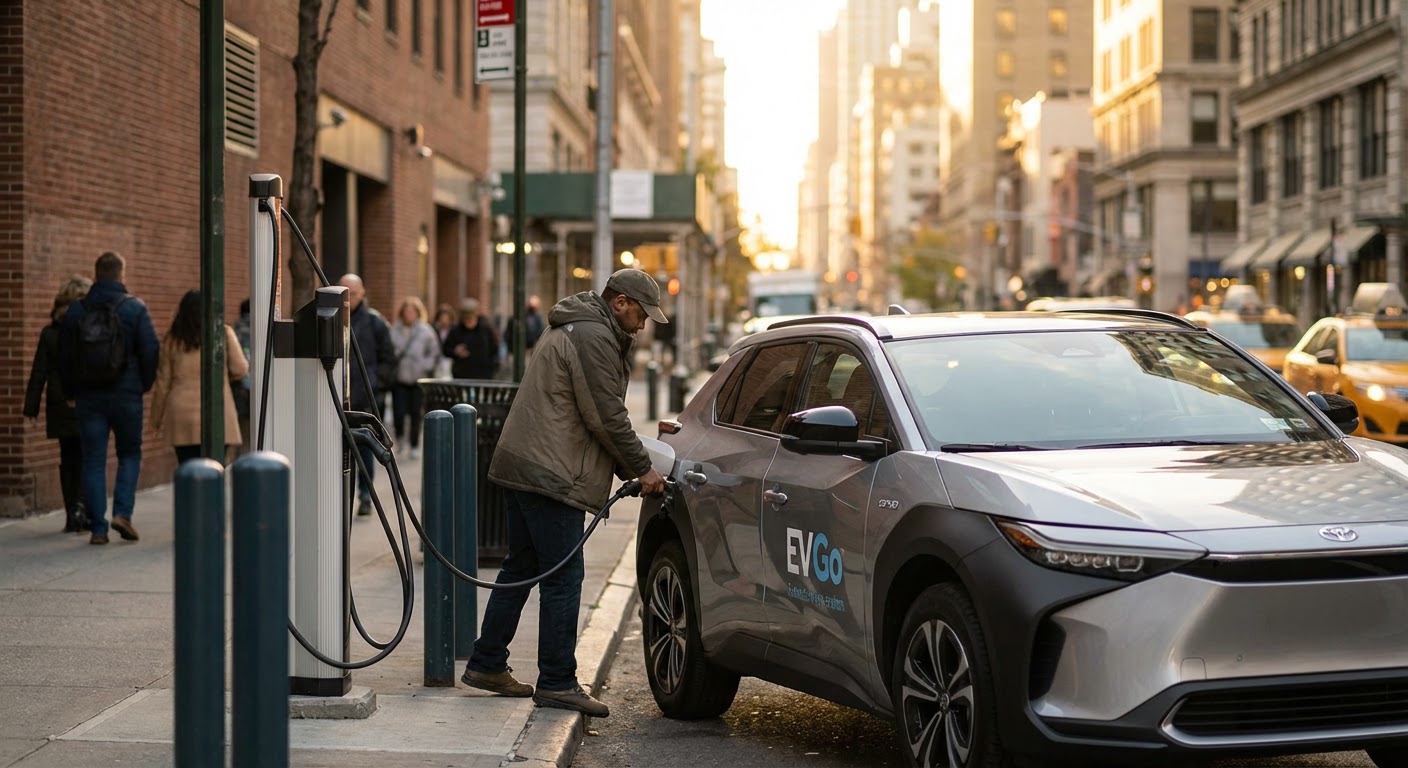
Yesterday's handshake between President Trump and newly reelected Japanese Prime Minister Sanae Takaichi was not just diplomatic theater. For gig workers and fleet owners in the United States, that handshake put money on the table. On February 18, 2026, the two leaders finalized a Critical Minerals Framework that effectively drops the price of popular Japanese electric vehicles by $7,500. According to the official joint statement, this agreement aligns regulatory standards to strengthen the supply chain (White House Briefing Room, 2026).
Until this week, many Japanese EV models—from Toyota, Nissan, and Honda—were excluded from the full IRS Section 30D tax credit. Their battery minerals did not come from a country with a specific Free Trade Agreement (FTA). That changed yesterday. Under the new agreement, Japanese-processed minerals now qualify as FTA-compliant.
If you drive for Uber or manage a courier fleet, this is the only tax update that matters this quarter. Here is what the new deal means for your bottom line.
Key takeaways
The $7,500 credit expanded:** Japanese-brand EVs that were previously ineligible may now qualify for the full Section 30D tax credit due to updated mineral sourcing rules. Lower CapEx for drivers:** Gig workers buying qualified vehicles can reduce their purchase price, lowering monthly payments and depreciation schedules. Current data suggests vehicle costs consume 25-30% of gross revenue for full-time rideshare drivers (The Rideshare Guy, 2025). Freight opportunities:** A new $36 billion Japanese investment in US infrastructure—including a large-scale plant in Ohio—means more loads for flatbed and heavy-haul owner-operators (U.S. Dept. of Commerce, 2026). Supply chain stability:** A joint "Rapid Response Group" aims to fix parts shortages, which cuts downtime for logistics companies.
The "loophole" that just opened for gig workers
Uber and Lyft drivers live on thin margins. Vehicle depreciation is the quiet killer of profit. The Section 30D Clean Vehicle Credit has been a lifeline, offering up to $7,500 off qualified EVs. But the IRS has strict rules: a percentage of the battery's critical minerals must come from the US or an FTA partner.
Section 30D Clean Vehicle Credit — A federal tax incentive authorized by the Inflation Reduction Act providing up to $7,500 for new electric vehicles that meet strict battery sourcing, manufacturing, and MSRP guidelines.
Before February 18, 2026, Japan's status was complicated. This left many reliable Japanese models ineligible for the full amount. Drivers had to choose between a preferred vehicle (like a Toyota) and a tax break (on a Tesla or GM).
The change: The new framework officially categorizes Japanese-processed minerals as compliant.
Why this matters: If you buy a vehicle in 2026, you now have a wider range of eligible cars. This is not just a tax deduction at the end of the year. Since 2024, you can transfer this credit to the dealer for an immediate point-of-sale discount. Kelley Blue Book (2025) reports that EVs can depreciate by 49% over five years. Applying this $7,500 credit upfront immediately narrows that equity gap.
"This trade agreement may allow Japanese companies greater access to the Inflation Reduction Act's lucrative Sec. 30D Clean Vehicle Credit." — Legal Analysis Team, Kilpatrick Townsend & Stockton LLP (2026)
If you are planning a vehicle purchase this quarter, pause. Verify the VIN against the updated IRS lists that will likely be revised following this announcement. Get the timing wrong, and you lose thousands.
Infrastructure spending = more loads for truckers
While gig workers get cheaper cars, owner-operators get more work. The diplomatic announcement included a confirmed $36 billion in new Japanese investments into the US economy.
Construction runs on logistics. The centerpiece of this investment is a 9.2 Gigawatt natural gas power plant in Portsmouth, Ohio.
For our trucking clients, this signals a surge in demand for: Flatbed & Heavy Haul:** Moving turbines, generators, and construction materials to Ohio. Industrial construction projects of this scale historically increase regional flatbed spot rates by 12-15% (DAT Freight & Analytics, 2025). Hazmat & Tankers:** Supporting the new synthetic diamond and critical minerals facility announced for Georgia. General Freight:** Supporting the network of contractors and suppliers that pop up around these mega-projects.
President Trump highlighted this industrial push on Truth Social yesterday: "America is building again. America is producing again. And America is winning again."
For independent owner-operators, these projects are high-value contracts. They are not sporadic spot market loads; they are long-term infrastructure lanes. If you run a small fleet, now is the time to look for brokers handling accounts for Japanese industrial firms operating in the Midwest.
Faster repairs for your fleet
The most frustrating expense for any logistics business is not fuel. It is downtime. Waiting three weeks for a sensor or a chip because of "supply chain issues" destroys cash flow. According to the American Trucking Associations (2025), unplanned downtime costs the average fleet approximately $760 per vehicle per day.
Part of the Takaichi-Trump agreement establishes a Rapid Response Group led by the US Department of Energy and Japan's METI. Their mandate is to identify supply chain gaps for critical minerals and components and accelerate permitting for mining projects.
Rapid Response Group — A newly formed joint US-Japan task force designated to bypass standard permitting delays for critical supply chain components and semiconductor materials.
Howard Lutnick, the US Secretary of Commerce, was blunt about the goal: "We will no longer rely on foreign supply for this essential material... Japan is providing the capital. The infrastructure is being built in the United States."
For a trucking company, "domestic supply" translates to "parts in stock." As these facilities come online, the availability of high-tech components for modern trucks (which rely heavily on these minerals for sensors and ECUs) should stabilize. This keeps your wheels turning.
Strategic tax planning for 2026
This news reinforces why generic DIY tax software often fails small business owners. Tax software asks, "Did you buy a car?" It rarely asks, "Did you check if your Japanese EV now qualifies for the expanded Section 30D credit based on the Feb 18th trade deal?"
At USTAXX, we look at where policy hits your P&L.
Action items for USTAXX clients:
- Review vehicle purchases: If you bought a Japanese EV earlier in 2026 that was deemed ineligible, we need to check if retroactive guidance allows us to amend or claim the credit.
- Depreciation vs. credits: For some fleet owners, taking the Section 45W (Commercial) credit is better than Section 30D. We run the numbers to see which net yields the highest refund. Section 45W is a commercial clean vehicle credit allowing businesses to claim up to $7,500 for vehicles under 14,000 lbs without the strict mineral sourcing requirements of Section 30D (IRS, 2025).
- BOI reporting: New partnerships often mean new entities. If you form a new LLC to contract for these construction projects, remember that Beneficial Ownership Information (BOI) reports must be filed within 30 days of formation.
Do not lose $7,500 because you skipped the fine print of a trade deal. That is our job.
Frequently asked questions
Does this apply to hybrid vehicles or only full EVs? Yes, the Section 30D credit applies to qualified Plug-in Hybrid Electric Vehicles (PHEVs) as well, provided they meet battery capacity requirements (minimum 7 kWh). Recent data shows that PHEVs accounted for 20% of all plug-in sales in 2025, and many Japanese PHEVs previously on the fence regarding mineral sourcing may now be safer bets for the credit.
Can I claim the $7,500 credit if I use the car for Uber 100% of the time? Yes, but how you claim it depends on your business structure. You can claim the personal credit (Section 30D) or, in some cases, the Commercial Clean Vehicle Credit (Section 45W). While Section 45W is often more flexible regarding sourcing, the new Japan deal brings Section 30D back into play for many drivers, which allows for an immediate point-of-sale transfer to the dealer.
How soon will the IRS list be updated? The IRS typically updates the FuelEconomy.gov eligible vehicle list within 14-30 days of major trade determinations. However, the legal effective date is the key. We advise clients to save the VIN and purchase date immediately so we can cross-reference it during your filing.
Do I need a specific business structure to haul for these new Ohio projects? Yes, most heavy industrial brokers will require you to be an LLC or Inc. with an active MC number and specific insurance minimums. Industry standards for infrastructure projects typically mandate $1M in liability coverage plus $100k in cargo insurance (FMCSA, 2025). If you are operating as a sole proprietor, you may need to incorporate to bid on these infrastructure lanes.
Ready to optimize your tax strategy?
Our IRS-authorized experts specialize in complex tax preparation for owner-operators, gig workers, and small businesses.
Schedule Your Consultation